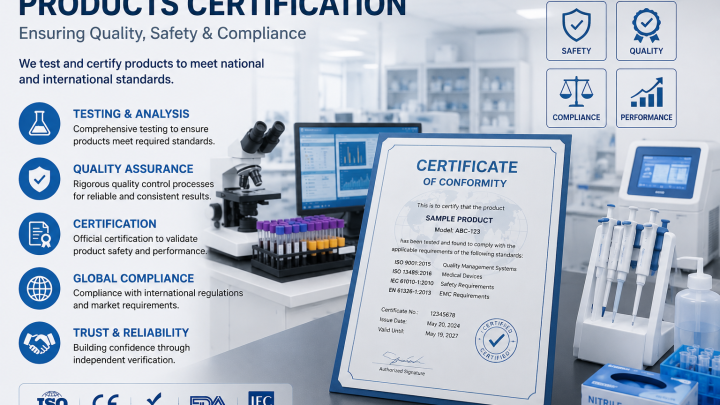
Biotech is one of the clearest cases where accreditation moves from “nice to have” to operationally important. The sector now spans clinical genomics, biobanking, cell and gene therapy, biomarker testing, advanced diagnostics, and high-containment laboratory work. These activities are data-heavy, method-sensitive, and often tied directly to patient safety, product release, or regulated submissions. Regulators and standards bodies have responded with a mix of technical standards and oversight frameworks rather than one single biotech rulebook.
A practical way to think about biotech accreditation is this: regulation authorizes products and activities; accreditation demonstrates the competence and impartiality of the organizations generating the underlying data, samples, inspections, and assessments. Globally, accreditation bodies are themselves expected to operate to ISO/IEC 17011, and ILAC says its Mutual Recognition Arrangement now covers 121 accreditation bodies from over 122 economies, which is one reason accredited results are often easier to trust across borders.
Why biotech needs accreditation now
The scale and complexity of biotech have risen sharply. In the United States, FDA maintains a dedicated, continuously updated list of approved cellular and gene therapy products, and in December 2023 it approved Casgevy and Lyfgenia for sickle cell disease, including the first FDA-approved therapy using CRISPR/Cas9 genome editing. In Europe, advanced therapy medicinal products, or ATMPs, are centrally authorised through EMA. At the same time, large national and international research infrastructures are expanding: the NIH All of Us program said in February 2025 that its genomic dataset had grown to more than 414,000 whole genome sequences, underscoring how much modern biotech depends on reliable sample handling and trustworthy data pipelines.
That growth increases the consequences of error. In biotech, a weak potency assay, poor chain-of-custody, mislabeled sample, or inconsistent sequencing workflow can affect research reproducibility, clinical decisions, lot release, or regulatory filings. WHO’s laboratory biosafety manual and laboratory biosecurity guidance both emphasize that biomedical and public-health laboratories need systematic controls for handling biological materials, technologies, and information.
The main accreditation standards biotech organizations should know
1. ISO/IEC 17025 — testing and calibration laboratories
This is the core accreditation standard for laboratories that need to show they operate competently and produce valid results. In biotech, it is especially relevant for analytical and QC laboratories performing testing such as identity, purity, sterility, endotoxin, potency-supporting assays, environmental monitoring, stability work, or specialized materials characterization. ISO describes 17025 as the international standard for testing and calibration laboratories and says it addresses competence, impartiality, and consistent operation.
2. ISO 15189:2022 — medical laboratories
Where biotech crosses into patient testing, ISO 15189 is often the more appropriate accreditation route. ISO says the 2022 edition applies to medical laboratories and is also applicable to point-of-care testing. In practice, this matters for molecular diagnostics, genomic testing, companion diagnostics support, and other workflows where results feed into patient care rather than only research or manufacturing.
3. ISO 20387 — biobanking
Biobanks are foundational to biotech because poor sample quality degrades downstream science. ISO 20387 specifies requirements for the competence, impartiality, and consistent operation of biobanks, including quality control requirements for biological material and associated data collections. ISO states that it applies to organizations performing biobanking of material from multicellular organisms and microorganisms for research and development.
4. ISO/IEC 17043 — proficiency testing providers
Biotech laboratories need independent evidence that their methods perform comparably and consistently. ISO/IEC 17043 sets requirements for the competence and impartiality of proficiency-testing providers. That matters for external quality assessment in areas like molecular diagnostics, microbiology, and specialized bioanalytical methods.
5. ISO 17034 — reference material producers
Biotech depends on controls, standards, and reference materials. ISO 17034 sets general requirements for the competence and consistent operation of reference material producers, including certified reference materials. For emerging assays and complex biologics, reliable reference materials are critical for method validation, calibration, and inter-laboratory comparability.
ILAC’s description of the accreditation ecosystem neatly ties these together: accreditation bodies operating to ISO/IEC 17011 accredit testing labs using ISO/IEC 17025, medical labs using ISO 15189, proficiency-testing providers using ISO/IEC 17043, and reference material producers using ISO 17034.
Where these standards apply in biotech
Clinical genomics and precision medicine
Clinical genomics sits on the border between laboratory science and patient care. If a laboratory is reporting results used for diagnosis, treatment selection, or risk assessment, ISO 15189 is usually the stronger fit because it is built for medical laboratories and explicitly covers quality and competence in that context. For research-use or preclinical assay development, ISO/IEC 17025 is often more relevant. The pressure for reliable genomic infrastructure is growing: NIH’s All of Us dataset now includes more than 414,000 whole genome sequences, and the program has become a large-scale example of why sample quality, metadata quality, and validated analytical pipelines matter.
Example: a genomics laboratory offering hereditary cancer testing or pharmacogenomics support would typically need validated methods, traceable records, participation in proficiency testing, controlled bioinformatics workflows, and a documented quality system. Accreditation helps turn those expectations into an externally assessed operating model. This is an inference from how ISO 15189, ISO/IEC 17043, and the broader accreditation system are designed to operate.
Cell and gene therapy
Cell and gene therapy is a flagship “emerging biotech” segment because it combines advanced manufacturing, complex analytics, and patient-specific logistics. FDA’s current cellular and gene therapy pages and guidances show how much emphasis the agency places on chemistry, manufacturing, and control, comparability, potency, and clinical-development strategy. EMA likewise treats gene-, cell-, and tissue-based medicines as ATMPs under a dedicated legal and scientific framework.
Example: Casgevy is a concrete example of why accreditation matters in supporting infrastructure. FDA states it is a cell-based gene therapy using CRISPR/Cas9 genome editing. A therapy like that depends on competent testing of incoming materials, in-process controls, release assays, and chain-of-identity/chain-of-custody-supporting records. Accreditation does not replace GMP or FDA/EMA approval, but it strengthens confidence in the laboratories, inspections, and reference materials behind the data package. The distinction between product regulation and competency accreditation is supported by the FDA/EMA framework pages and the ISO/ILAC accreditation structure.
Biobanking
Biobanking is one of the most direct use cases for accreditation in biotech. ISO 20387 exists precisely because the value of biological samples depends on competence in collection, processing, storage, retrieval, and associated data handling. WHO’s biobanking material also highlights quality, sustainability, and effectiveness as core issues, and BBMRI-ERIC provides Europe-wide discovery and access infrastructure for biobank resources and associated data.
Example: a cancer biobank supporting translational research may need to prove pre-analytical controls, storage conditions, donor-consent governance, sample traceability, and metadata integrity. ISO 20387 gives a framework for those capabilities, while WHO and BBMRI-ERIC illustrate the broader international push toward higher-quality, more interoperable biobank operations.
Biosafety and biosecurity
Not every biotech risk is analytical; some are operational and security-related. WHO’s Laboratory Biosafety Manual and 2024 laboratory biosecurity guidance both stress risk-based controls for biological materials, technologies, and information. Accreditation does not replace biosafety law or institutional biorisk governance, but accredited systems typically make it easier to demonstrate that risks are identified, documented, reviewed, and managed consistently.
What accreditation does for biotech organizations
First, it improves data credibility. ISO/IEC 17025 and ISO 15189 are built around demonstrable competence and valid results, which is exactly what biotech investors, regulators, sponsors, and clinical users need.
Second, it improves cross-border acceptability. Because ILAC’s MRA links accreditation bodies across more than 122 economies, an accredited result or accredited laboratory status can travel more easily than a purely self-declared quality claim.
Third, it improves scalability. Large biobanks and precision-medicine datasets only work if sample quality and data quality are reproducible over time. The growth of All of Us and the European biobank discovery infrastructure shows the direction of travel: biotech is becoming more networked, more data-intensive, and more dependent on standardized quality assurance.
Fourth, it supports regulatory readiness. FDA and EMA do not substitute accreditation for statutory requirements, but their increasing focus on CMC, comparability, safety monitoring, and advanced-therapy oversight means that organizations producing the underlying evidence benefit from mature, externally assessed systems.
What accreditation does not do
It is important not to oversell it. Accreditation is not the same thing as product approval, marketing authorization, GMP licensing, GLP compliance, or clinical-trial authorization. For biotech firms, the right model is usually layered:
- Regulation governs the product, the trial, or the manufacturing authorization.
- Accreditation supports the competence of laboratories, biobanks, PT providers, inspection functions, and reference-material producers that generate critical evidence and services.
A practical biotech accreditation roadmap
A biotech organization usually gets more value by accrediting the right functions rather than trying to “accredit everything.”
Start with the functions that create the highest regulatory or scientific risk:
- testing and QC laboratories: ISO/IEC 17025
- clinical and molecular diagnostics laboratories: ISO 15189
- biobank operations: ISO 20387
- external quality assessment and inter-lab comparison support: ISO/IEC 17043
- reference materials used for assay control and calibration: ISO 17034
Then build around those with:
- method validation and measurement traceability,
- documented competence requirements,
- proficiency testing or equivalent external quality checks,
- strong sample/data traceability,
- biosafety and biosecurity controls,
- and use of an accreditation body that is recognized through ILAC/ISO 17011 mechanisms.
Bottom line
For biotech, accreditation is becoming part of the sector’s infrastructure. As cell and gene therapies expand, as precision medicine relies on large genomic datasets, and as biobanks become more central to R&D and public health, organizations need more than internal SOPs. They need a credible, externally assessed way to show that their samples, results, and supporting processes are trustworthy. The strongest accreditation stack for biotech today is not one standard, but an ecosystem: ISO/IEC 17025 for testing, ISO 15189 for medical labs, ISO 20387 for biobanks, ISO/IEC 17043 for proficiency testing, and ISO 17034 for reference materials, all sitting under accreditation bodies operating to ISO/IEC 17011.
References
ISO 20387:2018, Biotechnology — Biobanking.
ISO 15189:2022, Medical laboratories — Requirements for quality and competence.
ISO/IEC 17025:2017, General requirements for the competence of testing and calibration laboratories.
ISO/IEC 17043:2023, General requirements for the competence and impartiality of proficiency testing providers.
ISO 17034:2016, General requirements for the competence of reference material producers.
ILAC overview and MRA/signatories.
FDA cellular and gene therapy products and guidances.
EMA advanced therapy medicinal products overview and legal/guidance pages.
WHO Laboratory Biosafety Manual and laboratory biosecurity guidance.
NIH All of Us genomic dataset update.
BBMRI-ERIC discovery and access infrastructure for biobanks.